Structural Chemogenomics Group
  • About
  • Publications
  • Databases
  • Software
  • DataSets
  • Teaching
  • Team
  • Contact
    • Ultra-large virtual screening hit (ULVSH) dataset
    • PDBbind dataset 19
    • LIT-PCBA
    • PPIome datasets
    • Fragdock dataset
    • PDBbind datasets 14
    • Docking dataset
    • Screening dataset
    • Quality Check
    • LIT-AlphaFold
    • SpaceDock
    • ProCare
    • OCSVM-ADRB2
    • IChem
    • SiteAlign
  • Databases
    • ATOLL
    • PDBmob
    • PPiome
    • GTMFrag
    • sc-PDB
    • scPDB-Frag
  • Downloads
  • Publications
    • Targeting of specific CCR5-G protein complexes underlies biased signaling by HIV-1 envelope glycoproteins.
    • Scaffold-Based Libraries Versus Make-on-Demand Space: A Comparative Assessment of Chemical Content.
    • Modeling Active-State Conformations of G-Protein-Coupled Receptors Using AlphaFold2 via Template Bias and Explicit Protein Constrains.
    • On the Difficulty to Rescore Hits from Ultralarge Docking Screens.
    • An anti-virulence drug targeting the evolvability protein Mfd protects against infections with antimicrobial resistant ESKAPE pathogens.
    • Large scale investigation of GPCR molecular dynamics data uncovers allosteric sites and lateral gateways.
    • CACHE Challenge #1: Targeting the WDR Domain of LRRK2, A Parkinson's Disease Associated Protein.
    • FLT3 signaling inhibition abrogates opioid tolerance and hyperalgesia while preserving analgesia.
    • The IMS Library: from IN-Stock to Virtual.
    • Subpocket Similarity-Based Hit Identification for Challenging Targets: Application to the WDR Domain of LRRK2.
    • Structural analysis of neomycin B and kanamycin A binding Aminoglycosides Modifying Enzymes (AME) and bacterial ribosomal RNA.
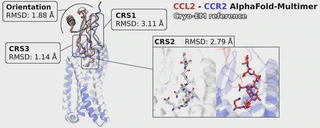
    • Benchmarking AlphaFold-Generated Structures of Chemokine-Chemokine Receptor Complexes.
    • Protein Structure-Based Organic Chemistry-Driven Ligand Design from Ultralarge Chemical Spaces.
    • Predicting the duration of action of β2-adrenergic receptor agonists: Ligand and structure-based approaches.
    • Structural Insights into Molecular Recognition and Receptor Activation in Chemokine-Chemokine Receptor Complexes.
    • Mining the Protein Data Bank to inspire fragment library design.
    • Overlap of On-demand Ultra-large Combinatorial Spaces with On-the-shelf Drug-like Libraries.
    • One class classification for the detection of β2 adrenergic receptor agonists using single-ligand dynamic interaction data.
    • Target-Focused Library Design by Pocket-Applied Computer Vision and Fragment Deep Generative Linking.
    • Estimating the Similarity between Protein Pockets.
    • On the Frustration to Predict Binding Affinities from Protein-Ligand Structures with Deep Neural Networks.
    • Targeting undruggable carbohydrate recognition sites through focused fragment library design.
    • Comprehensive analysis of commercial fragment libraries.
    • High-Throughput Screening for Extracellular Inhibitors of the FLT3 Receptor Tyrosine Kinase Reveals Chemically Diverse and Druggable Negative Allosteric Modulators.
    • Comparing transmembrane protein structures with ATOLL.
    • Targeting the Central Pocket of the Pseudomonas aeruginosa Lectin LecA.
    • Unexpected similarity between HIV-1 reverse transcriptase and tumor necrosis factor binding sites revealed by computer vision.
    • Modeling of CCR5 Recognition by HIV-1 gp120: How the Viral Protein Exploits the Conformational Plasticity of the Coreceptor.
    • True Accuracy of Fast Scoring Functions to Predict High-Throughput Screening Data from Docking Poses: The Simpler the Better.
    • Non-Carbohydrate Glycomimetics as Inhibitors of Calcium(II)-Binding Lectins.
    • Design, Synthesis and Biological Evaluation of Arylpyridin-2-yl Guanidine Derivatives and Cyclic Mimetics as Novel MSK1 Inhibitors. An Application in an Asthma Model.
    • A Computer Vision Approach to Align and Compare Protein Cavities: Application to Fragment-Based Drug Design.
    • Benchmarking Data Sets from PubChem BioAssay Data: Current Scenario and Room for Improvement.
    • Inhibition of the NAD salvage pathway in schistosomes impairs metabolism, reproduction, and parasite survival
    • LIT-PCBA: An Unbiased Data Set for Machine Learning and Virtual Screening
    • Exhaustive Repertoire of Druggable Cavities at Protein-Protein Interfaces of Known Three-Dimensional Structure
    • Ureidopeptide GLP-1 analogues with prolonged activity in vivo via signal bias and altered receptor trafficking
    • Is it time for artificial intelligence to predict the function of natural products based on 2D-structure
    • Unsupervised Classification of G-Protein Coupled Receptors and Their Conformational States Using IChem Intramolecular Interaction Patterns
    • Binding mode information improves fragment docking
    • Novel auristatin E-based albumin-binding prodrugs with superior anticancer efficacy in vivo compared to the parent compound
    • All in One: Cavity Detection, Druggability Estimate, Cavity-Based Pharmacophore Perception, and Virtual Screening
    • Local Interaction Density (LID), a Fast and Efficient Tool to Prioritize Docking Poses
    • Discovery of a Locally and Orally Active CXCL12 Neutraligand (LIT-927) with Anti-inflammatory Effect in a Murine Model of Allergic Airway Hypereosinophilia
    • Structural Insights on Fragment Binding Mode Conservation
    • CCR5 adopts three homodimeric conformations that control cell surface delivery
    • IChem: A Versatile Toolkit for Detecting, Comparing, and Predicting Protein–Ligand Interactions
    • Inhibition of neuronal FLT3 receptor tyrosine kinase alleviates peripheral neuropathic pain in mice
    • Structural Searching of Biosynthetic Enzymes to Predict Protein Targets of Natural Products
    • Ranking docking poses by graph matching of protein–ligand interactions: lessons learned from the D3R Grand Challenge 2
    • Structure-Based Detection of Orthosteric and Allosteric Pockets at Protein-Protein Interfaces
    • Efficient Inhibition of SmNACE by Coordination Complexes Is Abolished by S. mansoni Sequestration of Metal
    • The impact of in silico screening in the discovery of novel and safer drug candidates
    • Do Fragments and Crystallization Additives Bind Similarly to Drug-like Ligands?
    • Multi-target Fragments Display Versatile Binding Modes
    • A step-economical multicomponent synthesis of 3D-shaped aza-diketopiperazines and their drug-like chemical space analysis
    • Comparing atom-based with residue-based descriptors in predicting binding site similarity: do backbone atoms matter?
    • Docking pose selection by interaction pattern graph similarity: application to the D3R grand challenge 2015
    • Behavioral and neurochemical characterization of TrkB-dependent mechanisms of agomelatine in glucocorticoid receptor-impaired mice
    • Novel aminotetrazole derivatives as selective STAT3 non-peptide inhibitors
    • IChemPIC: A Random Forest Classifier of Biological and Crystallographic Protein–Protein Interfaces
    • A single-residue change in the HIV-1 V3 loop associated with maraviroc resistance impairs CCR5 binding affinity while increasing replicative capacity
    • Discovery of Potent Inhibitors of Schistosoma mansoni NAD+ Catabolizing Enzyme
    • Similarity between Flavonoid Biosynthetic Enzymes and Flavonoid Protein Targets Captured by Three-Dimensional Computing Approach
    • Time-Resolved FRET Binding Assay to Investigate Hetero-Oligomer Binding Properties: Proof of Concept with Dopamine D1/D3 Heterodimer
    • sc-PDB: a 3D-database of ligandable binding sites—10 years on
    • Targeting the cis-dimerization of LINGO-1 with low MW compounds affects its downstream signalling
    • Beware of Machine Learning-Based Scoring Functions—On the Danger of Developing Black Boxes
    • Design of a General-Purpose European Compound Screening Library for EU-OPENSCREEN
    • Single cell tracking assay reveals an opposite effect of selective small non-peptidic α5β1 or αvβ3/β5 integrin antagonists in U87MG glioma cells
    • sc-PDB-Frag: A Database of Protein–Ligand Interaction Patterns for Bioisosteric Replacements
    • Probing the catalytic mechanism of bovine CD38/NAD+glycohydrolase by site directed mutagenesis of key active site residues
    • Targeting of Smoothened for therapeutic gain.
    • Synthesis and biological properties of thiazole-analogues of pyochelin, a siderophore of Pseudomonas aeruginosa
    • TRAF4 Is a Novel Phosphoinositide-Binding Protein Modulating Tight Junctions and Favoring Cell Migration
    • Schistosoma mansoni NAD+ catabolizing enzyme: Identification of key residues in catalysis
    • Structure du récepteur Smoothened
    • Computational Profiling of Bioactive Compounds Using a Target-Dependent Composite Workflow
    • Proteome-scale docking: myth and reality
    • Exploration of the Orthosteric/Allosteric Interface in Human M1 Muscarinic Receptors by Bitopic Fluorescent Ligands
    • Modeling the allosteric modulation of CCR5 function by Maraviroc
    • Predicting Ligand Binding Modes from Neural Networks Trained on Protein–Ligand Interaction Fingerprints
    • Encoding Protein–Ligand Interaction Patterns in Fingerprints and Graphs
    • Glucose 6P Binds and Activates HlyIIR to Repress Bacillus cereus Haemolysin hlyII Gene Expression
    • Selective Fluorescent Nonpeptidic Antagonists For Vasopressin V2 GPCR: Application To Ligand Screening and Oligomerization Assays.
    • Structural Insights into the Molecular Basis of the Ligand Promiscuity
    • Comparison and Druggability Prediction of Protein–Ligand Binding Sites from Pharmacophore-Annotated Cavity Shapes
    • Protein–Ligand-Based Pharmacophores: Generation and Utility Assessment in Computational Ligand Profiling
    • Insights into the Mechanism of Bovine CD38/NAD+Glycohydrolase from the X-Ray Structures of Its Michaelis Complex and Covalently-Trapped Intermediates
    • Fluorescent Derivatives of AC-42 To Probe Bitopic Orthosteric/Allosteric Binding Mechanisms on Muscarinic M1 Receptors
    • Structure-Based Discovery of Allosteric Modulators of Two Related Class B G-Protein-Coupled Receptors
    • Synthesis and biological properties of conjugates between fluoroquinolones and a N3′′-functionalized pyochelin
    • Oligomeric-Induced Activity by Thienyl Pyrimidine Compounds Traps Prion Infectivity
    • Pyochelin Enantiomers and Their Outer-Membrane Siderophore Transporters in Fluorescent Pseudomonads: Structural Bases for Unique Enantiospecific Recognition
    • Synthesis, biological evaluation, and automated docking of constrained analogues of the opioid peptide H-Dmt-D-Ala-Phe-Gly-NH₂ using the 4- or 5-methyl substituted 4-amino-1,2,4,5-tetrahydro-2-benzazepin-3-one scaffold.
    • Agonist-dependent effects of mutations in the sphingosine-1-phosphate type 1 receptor
    • Allosteric Model of Maraviroc Binding to CC Chemokine Receptor 5 (CCR5)
    • Similar interactions of natural products with biosynthetic enzymes and therapeutic targets could explain why nature produces such a large proportion of existing drugs
    • Enhancing the Accuracy of Chemogenomic Models with a Three-Dimensional Binding Site Kernel
    • Flavonoids as inhibitors of human CD38
    • sc-PDB: a database for identifying variations and multiplicity of ‘druggable’ binding sites in proteins
    • New Insights into the Mechanisms whereby Low Molecular Weight CCR5 Ligands Inhibit HIV-1 Infection
    • Identification by high-throughput screening of inhibitors of Schistosoma mansoni NAD+ catabolizing enzyme
    • Binding of Protein Kinase Inhibitors to Synapsin I Inferred from Pair-Wise Binding Site Similarity Measurements
    • Alignment-Free Ultra-High-Throughput Comparison of Druggable Protein−Ligand Binding Sites
    • Estrogen Receptor Alpha as a Key Target of Red Wine Polyphenols Action on the Endothelium
    • Structure-Based Approaches to Target Fishing and Ligand Profiling
    • Increasing Selectivity of CC Chemokine Receptor 8 Antagonists by Engineering Nondesolvation Related Interactions with the Intended and Off-Target Binding Sites
    • Molecular determinants of non-competitive antagonist binding to the mouse GPRC6A receptor
    • Stereospecificity of the Siderophore Pyochelin Outer Membrane Transporters in Fluorescent Pseudomonads
    • Development and Validation of a Novel Protein−Ligand Fingerprint To Mine Chemogenomic Space: Application to G Protein-Coupled Receptors and Their Ligands
    • Conformationally constrained opioid ligands: The Dmt-Aba and Dmt-Aia versus Dmt-Tic scaffold
    • Customizing G Protein-coupled receptor models for structure-based virtual screening.
    • Small Neutralizing Molecules to Inhibit Actions of the Chemokine CXCL12
    • Selective Structure-Based Virtual Screening for Full and Partial Agonists of the β2 Adrenergic Receptor
    • Hot-Spots-Guided Receptor-Based Pharmacophores (HS-Pharm): A Knowledge-Based Approach to Identify Ligand-Anchoring Atoms in Protein Cavities and Prioritize Structure-Based Pharmacophores
    • Ranking Targets in Structure-Based Virtual Screening of Three-Dimensional Protein Libraries: Methods and Problems
    • A simple and fuzzy method to align and compare druggable ligand-binding sites
    • Domain versatility in plant AB-toxins: Evidence for a local, pH-dependent rearrangement in the 2γ lectin site of the mistletoe lectin by applying ligand derivatives and modelling
    • How to measure the similarity between protein ligand-binding sites?
    • Molecular modeling of the second extracellular loop of G-protein coupled receptors and its implication on structure-based virtual screening
    • Identification of Nonpeptide CCR5 Receptor Agonists by Structure-based Virtual Screening
    • Mapping the Binding Site of Arginine Vasopressin to V1a and V1b Vasopressin Receptors
    • Chemogenomic approaches to rational drug design
    • Optimizing Fragment and Scaffold Docking by Use of Molecular Interaction Fingerprints
    • Topological analysis of the complex formed between neurokinin A and the NK2 tachykinin receptor
    • In Silico-Guided Target Identification of a Scaffold-Focused Library:  1,3,5-Triazepan-2,6-diones as Novel Phospholipase A2 Inhibitors
    • Identification and characterisation of the dopamine receptor II from the cat flea Ctenocephalides felis (CfDopRII)
    • Redesign of Schistosoma mansoni NAD+ Catabolizing Enzyme: Active Site H103W Mutation Restores ADP-Ribosyl Cyclase Activity
    • N-Benzoyl-N-[1-(1-naphthyl)ethyl]-trans-1,2-diaminocyclohexanes: Development of 4-Chlorophenylcarboxamide (Calhex 231) as a New Calcium Sensing Receptor Ligand Demonstrating Potent Calcilytic Activity
    • Binding Properties of Pyochelin and Structurally Related Molecules to FptA of Pseudomonas aeruginosa
    • Design of nevirapine derivatives insensitive to the K103N and Y181C HIV-1 reverse transcriptase mutants
    • Assessing the Scaffold Diversity of Screening Libraries
    • Development and virtual screening of target libraries
    • sc-PDB:  an Annotated Database of Druggable Binding Sites from the Protein Data Bank
    • Probing the Reorganization of the Nicotinic Acetylcholine Receptor during Desensitization by Time-Resolved Covalent Labeling Using [3H]AC5, a Photoactivatable Agonist
    • A chemogenomic analysis of the transmembrane binding cavity of human G-protein-coupled receptors
    • Delineating a Ca2+ Binding Pocket within the Venus Flytrap Module of the Human Calcium-sensing Receptor
    • Production of Calcium-Mobilizing Metabolites by a Novel Member of the ADP-Ribosyl Cyclase Family Expressed in Schistosoma mansoni,
    • Dynamics and Metal Exchange Properties of C4C4 RING Domains from CNOT4 and the p44 Subunit of TFIIH
    • Design of Small-Sized Libraries by Combinatorial Assembly of Linkers and Functional Groups to a Given Scaffold: Application to the Structure-Based Optimization of a Phosphodiesterase 4 Inhibitor
    • Solution Structure of the C-terminal Domain of TFIIH P44 Subunit Reveals a Novel Type of C4C4 Ring Domain Involved in Protein-Protein Interactions
    • N,N‘-Linked Oligoureas as Foldamers: Chain Length Requirements for Helix Formation in Protic Solvent Investigated by Circular Dichroism, NMR Spectroscopy, and Molecular Dynamics
    • Synthesis of (±)-2-O-[4‘-(N-9‘ ‘-Purinyl)butyl] myo-Inositol 1,4,5-Tris(phosphate), a Potent Full Agonist at the d-myo-Inositol 1,4,5-Tris(phosphate) Receptor
    • Key Amino Acids Located within the Transmembrane Domains 5 and 7 Account for the Pharmacological Specificity of the Human V1b Vasopressin Receptor
    • A Three-dimensional Model of the Neprilysin 2 Active Site Based on the X-ray Structure of Neprilysin IDENTIFICATION OF RESIDUES INVOLVED IN SUBSTRATE HYDROLYSIS AND INHIBITOR BINDING OF NEPRILYSIN 2
    • Functional Characterization of Sonic Hedgehog Mutations Associated with Holoprosencephaly
    • Structure of the His44 → Ala Single Point Mutant of the Distal Finger Motif of HIV-1 Nucleocapsid Protein:  A Combined NMR, Molecular Dynamics Simulation, and Fluorescence Study
    • High-Throughput Modeling of Human G-Protein Coupled Receptors:  Amino Acid Sequence Alignment, Three-Dimensional Model Building, and Receptor Library Screening
    • Positive and Negative Allosteric Modulators of the Ca2+-sensing Receptor Interact within Overlapping but Not Identical Binding Sites in the Transmembrane Domain
    • Comparative evaluation of eight docking tools for docking and virtual screening accuracy
    • Recovering the true targets of specific ligands by virtual screening of the protein data bank
    • Modeling and Mutagenesis of the Binding Site of Calhex 231, a Novel Negative Allosteric Modulator of the Extracellular Ca2+-sensing Receptor
    • Identification of the Binding Sites of the SR49059 Nonpeptide Antagonist into the V1a Vasopressin Receptor Using Sulfydryl-reactive Ligands and Cysteine Mutants as Chemical Sensors
    • Protein-based virtual screening of chemical databases. II. Are homology models of g-protein coupled receptors suitable targets?
    • Probing the cysteine-34 position of endogenous serum albumin with thiol-binding doxorubicin derivatives. Improved efficacy of an acid-sensitive doxorubicin derivative with specific albumin-binding properties compared to that of the parent compound.
    • Molecular Mimicry of an HLA-B27-derived Ligand of Arthritis-linked Subtypes with Chlamydial Proteins
    • Recovery of known T-cell epitopes by computational scanning of a viral genome.
    • ConsDock: A new program for the consensus analysis of protein–ligand interactions
    • Induced folding of the U2AF35 RRM upon binding to U2AF65
    • A rationally designed oligopeptide shows significant conformational changes upon binding to sulphate ions.
    • Dual Function for U2AF35 in AG-Dependent Pre-mRNA Splicing
    • Use of fluorescence polarization to monitor MHC-peptide interactions in solution.
    • Customized versus universal scoring functions: application to class I MHC–peptide binding free energy predictions
    • NMR-restrained docking of a peptidic inhibitor to the N-terminal domain of the phosphoenolpyruvate:sugar phosphotransferase enzyme I.
    • Protein-Based Virtual Screening of Chemical Databases. 1. Evaluation of Different Docking/Scoring Combinations
    • Synergistic Use of Virtual Screening and Biophysical Methods for the Protein-Based Design of Peptidomimetics
    • Structural Characterization of the Cysteine-rich Domain of TFIIH p44 Subunit
    • Thermodynamic stability of HLA-B*2705. Peptide complexes. Effect of peptide and major histocompatibility complex protein mutations.
    • An N-Acetylated Natural Ligand of Human Histocompatibility Leukocyte Antigen (Hla)-B39
    • Limited plasticity in the recognition of peptide epitope variants by an alloreactive CTL clone correlates directly with conservation of critical residues and inversely with peptide length.
    • Modeling the interactions of a peptide-major histocompatibility class I ligand with its receptors. I. Recognition by two αβ T cell receptors
    • Modeling the interactions of a peptide-major histocompatibility class I ligand with its receptors. II. Cross-reaction between a monoclonal antibody and two αβ T cell receptors
    • Predicting binding affinities of protein ligands from three-dimensional models: application to peptide binding to class I major histocompatibility proteins.
    • Nonapeptide Analogues Containing (R)-3-Hydroxybutanoate and β-Homoalanine Oligomers:  Synthesis and Binding Affinity to a Class I Major Histocompatibility Complex Protein
    • Solution structure of a conformationally constrained Arg-Gly-Asp-like motif inserted into the alpha/beta scaffold of leiurotoxin I.
    • Long-range effects in protein–ligand interactions mediate peptide specificity inl the human major histocompatibility antigen HLA-B27 (B*2701)
    • Structure-Based Design of Nonnatural Ligands for the HLA-B27 Protein
    • From peptides to peptidomimetics: design of nonpeptide ligands for major histocompatibility proteins
    • The same natural ligand is involved in allorecognition of multiple HLA-B27 subtypes by a single T cell clone: role of peptide and the MHC molecule in alloreactivity.
    • α-helix mimicry of a β-turn11Edited by J. Wells
    • Mutation of cis-proline 207 in mitochondrial creatine kinase to alanine leads to increased acid stability.
    • Substituting nonpeptidic spacers for the T cell receptor-binding part of class I major histocompatibility complex-binding peptides.
    • An HLA-B27 polymorphism (B*2710) that is critical for T-cell recognition has limited effects on peptide specificity
    • Binding of rationally designed non-natural peptides to the human leukocyte antigen HLA-B*2705
    • Synthesis of Oligo(3-hydroxybutanoate)(OHB)-Containing Peptides with High Binding Affinity to a Class-I-MHC Protein
    • Fine specificity of antigen binding to two class I major histocompatibility proteins (B*2705 and B*2703) differing in a single amino acid residue.
    • Structure-Permeation Relations of Met-enkephalin Peptide Analogues on Absorption and Secretion Mechanisms in Caco-2 Monolayers
    • A pseudo-particle approach for studying protein-ligand models truncated to their active sites
    • Molecular dynamics and structure-based drug design for predicting non-natural nonapeptide binding to a class I MHC protein
    • Rational design of nonnatural peptides as high-affinity ligands for the HLA-B*2705 human leukocyte antigen
    • MD simulations in Pseudo-Particle Fluids: Applications to active-site Protein Complexes
    • Molecular Dynamics Simulation of MHC-Peptide Complexes as a Tool for Predicting Potential T Cell Epitopes
    • Structure and molecular modeling of GABA-A receptor antagonists.
    • Molecular dynamics study of a complex between the human histocompatibility antigen HLA-A2 and the IMP58-66 nonapeptide from influenza virus matrix protein
    • Molecular modeling of an antigenic complex between a viral peptide and a class I major histocompatibility glycoprotein
    • Molecular Modeling of the Class I Human Histocompatibility Molecule HLA-A2 Presenting an Allele-Specific Nonapeptide from Influenza Matrix Protein
    • Moleküldynamiksimulation für ein allelspezifisches virales Nonapeptid aus dem Influenza-Matrix-protein in der Bindungstasche eines menschlichen MHC-Klasse-I-Proteins
    • Optically active benzamides as predictive tools for mapping the dopamine D2 receptor
  • Teaching
    • Strasbourg Summer School in Chemoinformatics 2026
    • Tutorials in chemoinformatics
    • Chémoinformatique du médicament M2
    • Structure for customized drugs
    • Structure-based Computer Assisted Drug Design

LIT-AlphaFold

May 29, 2024·
L. Urvas
,
L. Chiesa
,
G. Bret
,
C. Jacquemard
,
E. Kellenberger
Site
Last updated on May 29, 2024

← Quality Check
SpaceDock →